Autopapyrus · Lada Granta 1.6 8V 87 hp (2015)
https://autopapyrus.com/guides/lada/granta/diagnosing-a-suspension-knock/
https://autopapyrus.com/guides/lada/granta/diagnosing-a-suspension-knock/
Compiled automatically from service literature and owner experience. Specs are for the typical configuration — check them against your exact car before you start.
Lada Granta 1.6 8V 87 hp (2015): Diagnosing a Suspension Knock
On the first-generation Granta (B0 platform), a suspension knock most often comes from play and wear in the front end: sway bar links, ball joints and strut mount bearings wear out quickly, especially on high-mileage cars and rough roads. Diagnosis consists of a visual inspection under the car plus checking for play by hand.
─────────────────────────────────────────
Tools
5- Inspection pit or lift
- pry bar
- flashlight
- 10/13/17/19 mm wrenches
- flat-head screwdriver
Step by step
9 steps- Drive onto the pit or lift. Raise both front wheels off the ground (the front suspension is the priority).
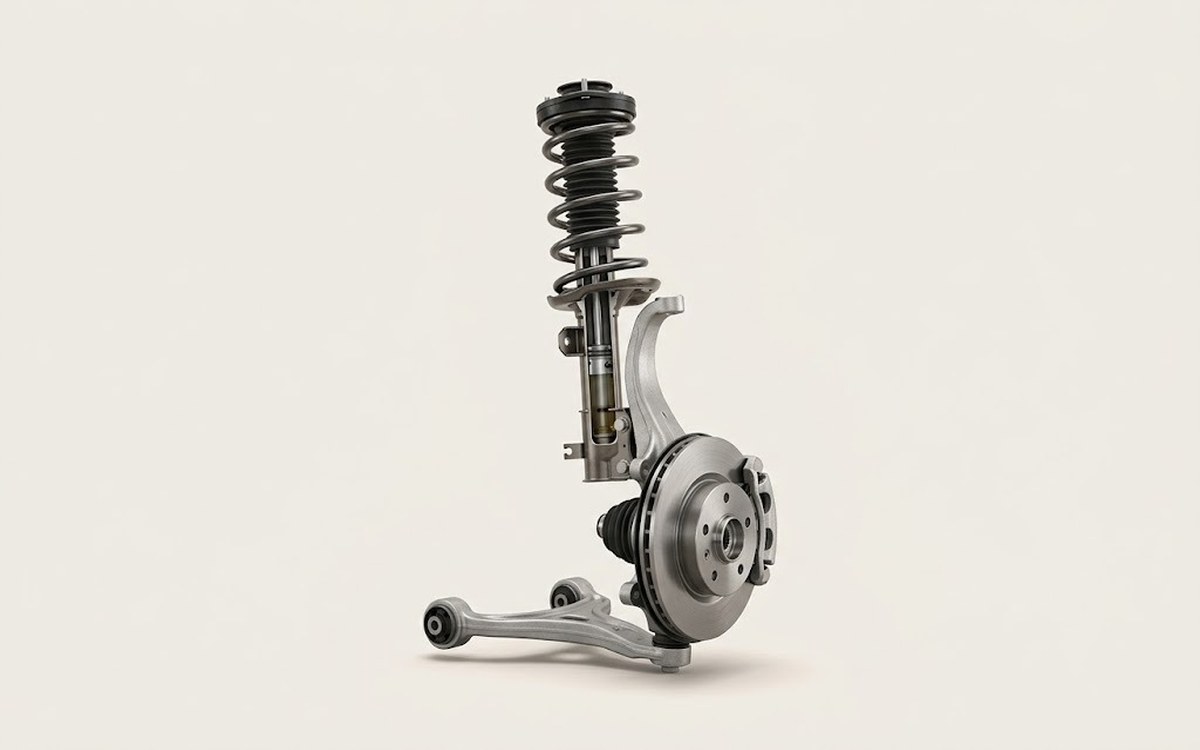
- Inspect the front shock absorbers and strut mount bearings (the black caps on top of the struts). Look for oil leaks, cracked boots and play in the cap.
- Check the boots on the lower control arm ball joints (on the sides, under the wheel near the brake disc). Tears or dirt inside mean wear.
- Grab the wheel (at the 3 and 9 o'clock positions) and rock it up and down: — if you hear a knock from "above," look for play in the strut mount bearing or the upper mount (rare on the Granta); — if the knock is "below," the culprit is the ball joint or the lower control arm bushing.
- Pull the wheel toward you and push it away (in the horizontal plane): — play means a worn ball joint or caliper guide pin (rare).
- Inspect the sway bar links (the thin rods connecting the control arms to the body): — grab each link by hand and shake it; play or knocking = a worn link.
- Check the front suspension control arm bushings (the rubber bushings at the ends of the arms): — use a pry bar to move the arm at its mounting point; if you see movement in the bushing, it is failed.
- Repeat the check on the rear suspension (raise the rear wheels): — a knock in the rear suspension usually comes from the shock absorbers or trailing arms; the procedure is the same.
- Bounce the body by hand at each corner (push down on the roof and release): — if the shock absorbers are good, the body will rebound 1-2 times and settle; if it bounces 3+ times, the shock absorbers are worn out. ───────────────────────────────────────── Typical findings and solutions: Knock when driving over potholes (sharp, in sync with body movement): — Most likely the sway bar links or ball joints. Replacement is mandatory (unsafe for handling). Knock when turning (crunching or clicking): — Ball joint or strut mount bearing (outer). Knock near the driver's seat over bumps: — Check the front strut mount bearing (left side). It knocks against the body from above. Knock at low speeds when parking (distinct click): — Often a sway bar link; on newer cars it may be a dead shock absorber. ─────────────────────────────────────────
Common mistakes and warnings
- Play in a ball joint or sway bar link is not something that "can wait." The car loses handling, especially at speed or in the rain
- If the diagnosis confirms wear, replace the parts before driving the car any further
- If the diagnosis reveals play in the wheel along with a crunching noise, stop immediately: brake failure or play in the wheel hub is possible (dangerous)
 How it works · 3D
How Car Suspension Works
How the part you're working on actually works — in plain English, on a 3D model.
Open in 3D →